
Decision-relevant analysis tailored to your exposure
Request a custom briefing or report
We produce bespoke briefings and reports designed around your specific geographic, sectoral, and operational exposure. Each engagement starts from your decision context, not a generic template. Our analysis integrates legal, political, economic, and security dynamics to assess how developments may affect your organisation, where risks are most likely to materialise, and which indicators matter most over time. Outputs are structured for executive use and can range from focused briefings on a single issue to in-depth reports supporting strategic planning and risk management.
RECENT REPORTS
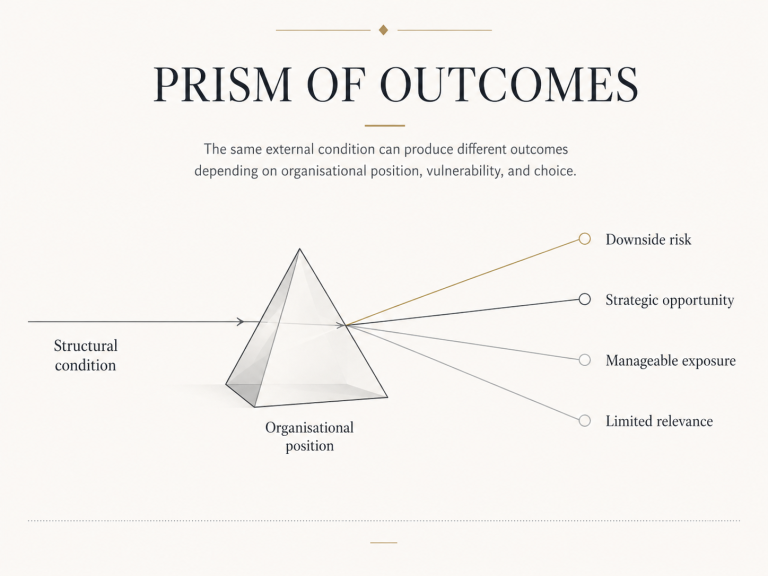
Exposure Is Not Risk
Our latest report examines why exposure and risk are too often treated as the same thing, and why that distinction matters for better geopolitical decision-making.
China, multipolarity, AI, sanctions, industrial policy, climate change, and deglobalisation are often described as risks in themselves. In most cases, they are better understood as sources of exposure.
Risk depends on the relationship between the external condition and the organisation. It depends on what is exposed, how the exposure connects to the business, where the vulnerability sits, and what consequence could follow.
That distinction matters because the same geopolitical development can damage one organisation and benefit another. It also helps avoid the habit of treating the whole international environment as a threat.
The better question is not simply whether something is risky. The better question is who is exposed, through what channel, and with what consequence.
Changing World Order
How are middle powers responding to changing world order? They are not great powers, but they are no longer passive actors sitting between the United States, China, Europe, Russia, and other major centres of power. Their choices now shape supply chains, energy markets, technology controls, defence spending, investment screening, market access, logistics routes, and regulatory exposure. This shift is taking place against a revisionist America and a harder overall geopolitical environment.

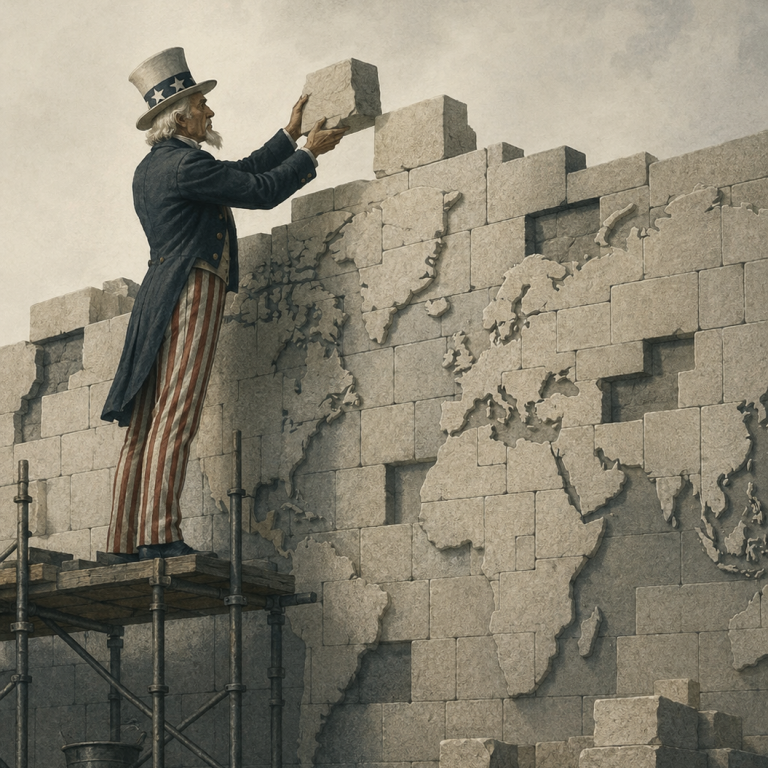
The Revisionist Hegemon: How America Is Rewriting the Order It Built
The United States has long been understood as the principal defender of the post-1945 international order. This report argues that this description no longer fully captures contemporary American behaviour.
Washington remains the world’s leading military, economic, and geopolitical power. Yet across trade, technology, alliances, legal institutions, sanctions, industrial policy, and hemispheric strategy, the United States is increasingly willing to revise elements of the order it helped create.
This report introduces the concept of the revisionist hegemon to explain this shift. The United States is not withdrawing from international politics or abandoning international order. It is attempting to renegotiate the terms of that order around sovereignty, strategic geography, industrial resilience, national power, and transactional reciprocity.
Liberation Day: One year after the tariffs
One year after the United States introduced sweeping tariffs under the “Liberation Day” declaration, the global economic and geopolitical landscape has been reshaped by uncertainty, shifting trade dynamics, and declining institutional trust. This report examines the real-world impact of those tariffs across industries, economies, and international relationships.


AI in the Iran Conflict and the New Defense Industrial Base
The conflict involving the United States and Iran highlights a structural shift in modern warfare. Artificial intelligence and commercial technology platforms are becoming embedded within the operational architecture of military capability. Rather than appearing as isolated AI weapons, technologies such as cloud computing, satellite communications, autonomy software, and data infrastructure are accelerating the entire strike enterprise.
This Insight Forward briefing examines how these developments are reshaping the defense industrial base and expanding corporate exposure to national security dynamics. As governments integrate commercial technologies into military operations, companies operating in AI, cloud infrastructure, autonomy systems, and satellite connectivity are becoming increasingly central to defense capability.
The report analyzes operational lessons from the conflict, changes in defense procurement structures, and the growing governance, cybersecurity, and political risks facing companies whose technologies intersect with military AI programs.
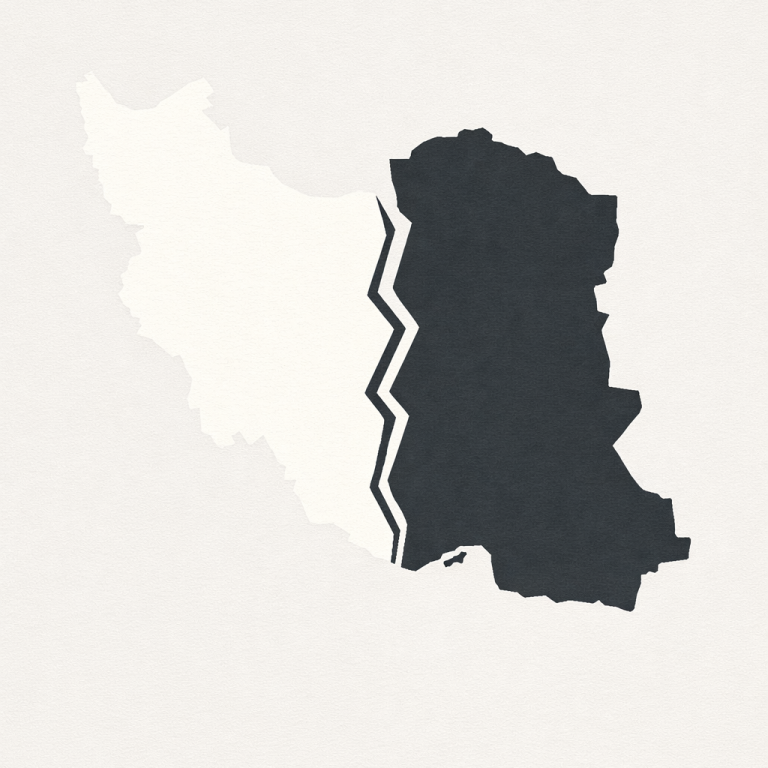
Iran Regime Scenarios
This Insight Forward report examines two plausible futures for Iran following escalating conflict with the United States and Israel: regime survival under intensified securitization or regime collapse leading to internal fragmentation and regional instability.
Through structured geopolitical scenario analysis, the report assesses how each pathway could shape Middle East security dynamics, energy markets, maritime risk in the Strait of Hormuz, and global economic stability. It also evaluates the future of Iran’s proxy networks, cyber operations, nuclear oversight risks, and the broader implications for businesses operating in a volatile geopolitical environment.
The Cost of Ambiguity
TARIFFS, COURTS, AND THE U.S. ECONOMY
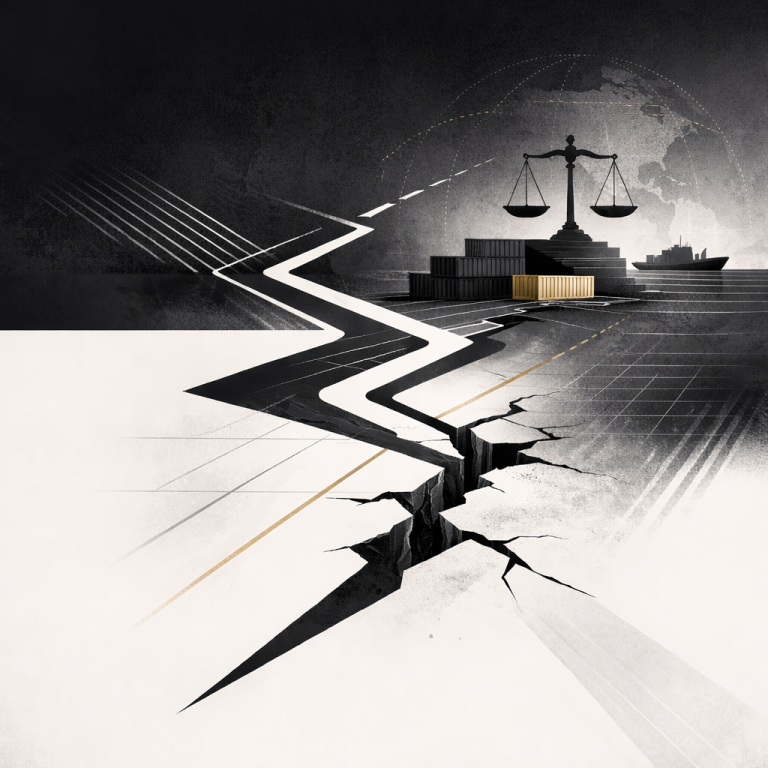
The Cost of Ambiguity is an analytical assessment of how recent Supreme Court limits on presidential tariff authority reshape U.S. trade policy, economic outcomes, and geopolitical relationships.
The report examines the Court’s ruling that emergency economic powers do not authorize unilateral tariffs without explicit congressional approval. While the decision narrows one legal pathway, it does not remove tariffs as a policy tool. Instead, it shifts trade policy toward temporary duties, alternative statutory authorities, and negotiated exemptions, increasing legal and institutional uncertainty.
Using empirical research from the Federal Reserve, IMF, and Congressional Budget Office, the report shows that broad-based tariffs function primarily as a domestic consumption tax. Most costs fall on U.S. consumers and firms through higher prices, reduced real incomes, and increased input costs. Inflation effects are measurable but moderate, while productivity and growth impacts are more persistent over time.
Beyond economics, the report highlights rising geopolitical and institutional risks. Trading partners are more likely to question the durability of U.S. commitments, demand stricter safeguards, or retaliate. Markets and multinational firms face higher regulatory risk as policy becomes more discretionary and less rule-based.
The report concludes with a structured monitoring framework that identifies legal, economic, and geopolitical indicators to watch. This allows decision makers to distinguish routine trade adjustments from structural shifts that could materially affect inflation, growth, supply chains, and international cooperation.
Read more detailed analysis and download the full report here.
Scenario: U.S. and Israeli Intervention Framed Around Protection of Iranian Protesters
What would escalation in Iran actually look like—and what would it mean for business?
Our latest scenario report examines a plausible pathway in which protest repression inside Iran becomes the trigger for limited U.S. and Israeli military intervention.
The analysis shows how a single, well-documented atrocity could shift international decision-making and rapidly spill into proxy conflict, maritime disruption, and a higher-risk regional baseline.
The key insight is simple: even “limited” intervention is unlikely to stay limited.
For companies exposed to energy markets, shipping lanes, insurance, sanctions, cyber risk, or regional operations, escalation dynamics matter more than intent.
Read more detailed analysis and download the full report here.


Russia–NATO Escalation Risk and Business Exposure
Escalation risk between Russia and NATO is rising without a deliberate move toward war, and the consequences increasingly fall on commercial systems rather than military targets. Russia’s demographic and economic constraints reduce the likelihood of large-scale conflict but push competition into grey-zone activity, including cyber operations, information pressure, and infrastructure disruption. At the same time, NATO’s defensive rearmament reinforces perceptions of a narrowing strategic environment, increasing the risk of miscalculation. For business, this means geopolitical risk is no longer episodic. Connectivity, data, energy, and logistics are now part of the competitive landscape, narrowing the boundary between national security and commercial exposure and making resilience a standing requirement rather than a crisis response.
Read more detailed analysis and download the full report here.
Geopolitical Influence in the age of Disinformation
State-sponsored manipulation of the information environment has become a structural feature of geopolitical competition, with direct consequences for political stability, regulatory decision-making, and corporate risk. Control over narratives increasingly delivers strategic effects comparable to control of energy flows, critical minerals, or transport corridors, allowing states to weaken rivals and influence outcomes without conventional force. Fragmented media ecosystems, algorithmic amplification, and polarised audiences create exploitable vulnerabilities that enable disinformation to spread at scale, eroding institutional trust and shaping market behaviour. Drawing on domestic and international cases, the analysis shows how information manipulation now influences consumer sentiment, reputational exposure, security risk, and operating conditions for businesses across sectors. As geopolitical competition intensifies, the information environment has become a strategic variable that companies can no longer afford to treat as peripheral.
Read more detailed analysis and download the full report here.


The U.S. National Security Strategy: Realism, Restraint, and Revisionism
This report provides a realist assessment of the 2025 U.S. National Security Strategy, examining where it aligns with restraint and offshore balancing, where it breaks from classical realism, and how its internal contradictions will shape U.S. behaviour and global geopolitics. It explains the strategy’s narrower hierarchy of interests, the downgrading of Europe, the fusion of national security with economic policy, and the structural pressures these choices create across the international system. Most importantly, it translates these shifts into clear implications for business, outlining how regulatory volatility, politicised supply chains, and fragmented standards will redefine risk and opportunity for globally integrated firms.
Read more detailed analysis and download the full report here.
What if the U.S. Invaded Venezuela
A U.S. invasion of Venezuela would almost certainly achieve rapid military success, but the strategic consequences would be far more complex and costly. While Venezuelan defences would collapse quickly, the aftermath would trigger a high-risk insurgency driven by militias, criminal networks, and regional armed actors, creating a prolonged stabilisation challenge. Latin American governments would condemn the intervention, isolating Washington and weakening cooperation on migration, security, and trade. Russia and China would exploit the crisis through indirect support and broader geopolitical pushback, while oil markets and humanitarian pressures would intensify. The scenario shows that regime removal is achievable, but durable stability is unlikely without a long and politically demanding occupation.
Read more detailed analysis and download the full report here.


Competition for Cobalt
Cobalt supply is now a strategic vulnerability for global industry. The Democratic Republic of the Congo remains the anchor of world supply while China holds dominant control over extraction, refining and transport infrastructure. This concentration exposes companies to geopolitical pressure, commercial fragility and regulatory disruption.
Operational risk is rising across the supply chain, regulatory and policy risk is accelerating with ESG becoming a core business liability. These issues threaten brand reputation, investor confidence and access to regulated markets.
Strategic risk is embedded in the wider geopolitical contest. China’s entrenched position in cobalt and refining capacity gives it leverage across entire industries. Western and Gulf attempts to diversify will take years to reshape market structure. Companies operating in cobalt-dependent sectors now face long-term exposure to geopolitical rivalry, supply concentration and the potential weaponization of mineral flows.
Read more detailed analysis and download the full report here.
New U.S. Defense Strategy
Washington is re-ordering its defence posture: homeland first, hemisphere next. The draft 2025 National Defence Strategy, steered by Undersecretary Elbridge Colby, pivots from global forward presence to a Monroe-style focus on securing the United States and policing its near abroad. In practice, that means Guard support on the southern border and expanded naval-air tasking in the Caribbean to disrupt criminal networks and block Chinese–Russian (“DragonBear”) influence in Latin America—while pressing NATO and Indo-Pacific partners to carry more as U.S. forces and funds are reallocated. The intent is prioritisation, not isolationism: concentrate finite power where it buys the most security. The trade-offs are real—heightened risk of deterrence gaps in Europe and Asia, sharper regional sensitivities in the Americas, and domestic political contention over America’s role.
Read more detailed analysis and download the full report here.


Narco-terrorism and National Security
Weaponised disinformation has moved from politics to the boardroom, targeting companies and the infrastructure they rely on. This report explains how false and manipulated narratives now act as a force multiplier alongside cyber, legal and physical risks—moving markets, eroding trust and, through behavioural manipulation, even triggering real-world disruption such as blackouts or city-wide gridlock without touching a single control system. It traces the threat across case studies and extremist dynamics, then sets out a practical playbook for leaders: secure executive ownership, assign multidisciplinary responsibility, harden and verify communications channels, monitor for early narrative shifts, run cross-functional exercises, and adapt incident response to information attacks. The aim is simple: faster truth, coherent action, and safer operations.
Read more detailed analysis and download the full report here.
The Geopolitics of Stablecoins
Stablecoins have moved from niche fintech to geopolitical infrastructure. By mid-2025 they anchor a ~$255bn market with daily volumes rivaling national payment systems, as private issuers behave like systemically important institutions—Tether’s U.S. T-bill holdings alone influence front-end yields and are estimated to save the U.S. government ~$15bn a year in financing costs. A regulatory race (GENIUS in the U.S., MiCA in the EU, Hong Kong’s 2026 regime) is formalising reserves and audits, while China explores a CNH token via Hong Kong to wire BRI trade. The result is a likely dual-track future: dollar tokens in advanced markets and yuan-linked rails across key corridors—lowering friction but raising fragmentation and sovereignty risks. This report explains the market, the rules, and what boards and treasurers should do next.
Read more detailed analysis and download the full report here.


Misinformation, Disinformation, and Reputation Warfare
Weaponised disinformation has moved from politics to the boardroom, targeting companies and the infrastructure they rely on. This report explains how false and manipulated narratives now act as a force multiplier alongside cyber, legal and physical risks—moving markets, eroding trust and, through behavioural manipulation, even triggering real-world disruption such as blackouts or city-wide gridlock without touching a single control system. It traces the threat across case studies and extremist dynamics, then sets out a practical playbook for leaders: secure executive ownership, assign multidisciplinary responsibility, harden and verify communications channels, monitor for early narrative shifts, run cross-functional exercises, and adapt incident response to information attacks. The aim is simple: faster truth, coherent action, and safer operations.
Read more detailed analysis and download the full report here.
Corporations Targeted Over Politics
Governments and activists increasingly treat major companies as political actors. The result is targeted action through regulation, selective enforcement, market access limits, debanking, and content controls. Recent flashpoints include US scrutiny of banks and law firms, pressure on Intel’s leadership over China ties, India’s censorship dispute with X, and EU enforcement under the Digital Markets Act. This report explains why firms are singled out, how tactics vary, and what to expect next. It provides a practical playbook for leaders to map exposure, stress test revenue and operations, set monitoring and escalation triggers, and prepare clear response options.
For the full breakdown and action plan, read the complete report.

United Nations Accusations Against Corporations Working with Israel
The United Nations Special Rapporteur on the situation of human rights in the Palestinian territories has issued a report alleging that a broad range of international businesses across sectors including defence, technology, construction, energy, finance, and logistics have contributed to what is described by the report as an “economy of genocide.” According to the report, these companies have supplied goods, services and investment that sustain military operations, enable surveillance and demolitions, and support settlement expansion. While the document does not represent binding legal findings, it underscores growing scrutiny of corporate involvement in the conflict and highlights the potential for heightened legal, reputational and operational risks for firms maintaining commercial relationships linked to these activities.
Our analysis outlines the UN’s key claims, summarises the sectors and companies named, and considers the potential implications for legal exposure, investment decisions and stakeholder engagement.
Revolutionary Violence in the New Gilded Age
In the late 19th century, during the first Gilded Age, American cities erupted in labour unrest and radical violence. Bombs detonated in Chicago’s Haymarket Square, steelworkers battled Pinkertons at Homestead, and President McKinley was assassinated by an anarchist who believed he was striking a blow against tyranny. It was an era of explosive industrial growth, stark inequality, and brittle institutions.
Today, a second Gilded Age is taking shape. Many of the underlying forces have returned, but the targets are shifting. Digital-first movements, asymmetric tools, and a 24-hour information loop now place corporations, and the executives who lead them, at the centre of ideological conflict.
This report examines how inequality, identity politics, and accelerating technology are converging to create a new threat landscape for senior leaders. By tracing patterns from past upheavals and mapping today’s warning signals, we aim to help boards and C-suites act before isolated incidents coalesce into systemic risk.


Israel After the War - Corporate Implications
In the wake of the recent Israel-Hamas conflict, businesses face an increasingly complex landscape filled with geopolitical risks, economic disruption, and reputational challenges. "Israel After the War - Corporate Implications" is an essential report for corporate leaders, strategists, and risk managers seeking clarity amid uncertainty.
This report dives into economic fallout, political instability, security concerns, and diplomatic tensions, providing a clear picture of the operational, financial, and reputational risks companies must navigate in Israel post-conflict. Whether you're assessing investment opportunities, preparing for governance scenarios in Gaza, or safeguarding your brand reputation amid regional tensions, this report offers data-driven insights and strategic foresight.
Executive Briefing Note - Assassinations

Executive Briefing Note - Changing Monetary Policy
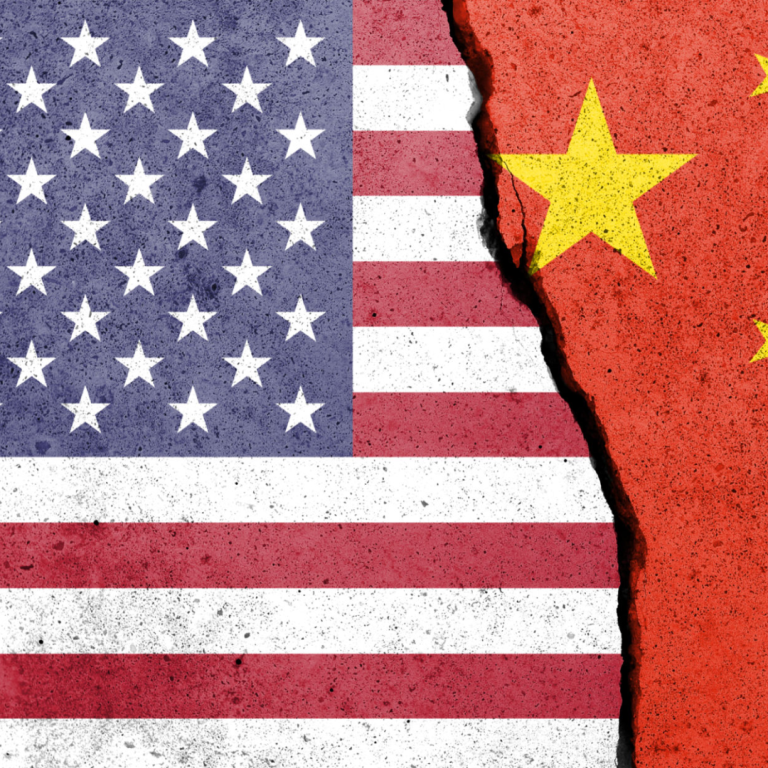
Executive Briefing Note - U.S.-China Decoupling
Top 10 Geopolitical Risks for Businesses in 2024
At Insight Forward we firmly believe that businesses must be prepared for the geopolitical risks that could impact their market share and revenue. This means having a long-term strategy to deal with the oscillations that occur in global politics. To that end, we are already thinking about the most significant geopolitical risks that corporations will likely face in 2024.
Where are the ecoterrorists?
For over 40 years, radical environmentalists have engaged in direct action, but protests and sabotage have not evolved into a sustained campaign of violence against individuals. There is currently no indication that this will change in the near term. However, the current circumstances are unique, as the evidence for human impacts on the climate is now widely recognized as indisputable and urgent. Consequently, there is an increasing risk that radical environmentalists and their sympathizers may resort to more extreme forms of violence.


The Unabombers Enduring Influence
The report examines the lasting impact of Ted Kaczynski, also known as the Unabomber, on various extremist groups. While Kaczynski himself was not directly associated with environmentalism, his ideology is very likely to influence attacks by radicals on the political left and right. This includes ecofacists and more traditional eco-radicals.
Whitepaper: Emerging Technology and Intelligence Analysis
Major inventions have regularly upended the intelligence gathering mechanisms of security professionals. Adapting to these advanced technologies is critical for analysts and protectors. Our whitepaper discusses some of the key trends in emerging technology and intelligence analysis.
AI Ideology and Geopolitics
There is an ideological battle developing in AI. On the one hand are those advocating for the wider use and rapid development of Artificial Intelligence, on the other those that are calling for AI research to be slowed down, to ensure it is carried out safely and ethically.


Globalization is in retreat, old conflicts and rivalries are re-emerging and what we are experiencing today is a product of an anarchic global system where state and non-state actors collaborate and compete based on their own self-interests rather than for any collective good. This is the revenge of geopolitics.
Corporate Reputation Warfare
The same kinds of information operations used in domestic politics, foreign policy, and geopolitics are now being used to directly target corporations. IF assess that this 'corporate reputation warfare' will be an important risk over the long term.
Find out why in our latest report - Corporate Reputation Warfare: Disinformation, polarization, and the Marketplace.
Report: The Wider Implications of the Israel-Hamas War
The Israel-Hamas war has entered its third week, and its implications are expanding beyond the battlefield. This will have political and business impacts.
Iran's relationship with AQAP
While terrorism is not necessarily always a direct risk to multinational organizations Al Qeada in the Arabian Peninsula continues to call for attacks targeting well-known business leaders and Western commercial interests. In this report, we look at the growing relationship between AQAP in Yemen and Iran through Al Qaeda's de facto leader, Saif al-Adel.